
THE SHORT ANSWER
Pour-over coffee is made by pouring hot water over grounds held in a filter. Our house starting point is 20 g medium-fine coffee and 320 g water: wet the grounds, pause briefly, then pour steadily and let the brewer drain. Adjust the next cup by taste.
Set yourself up before pouring
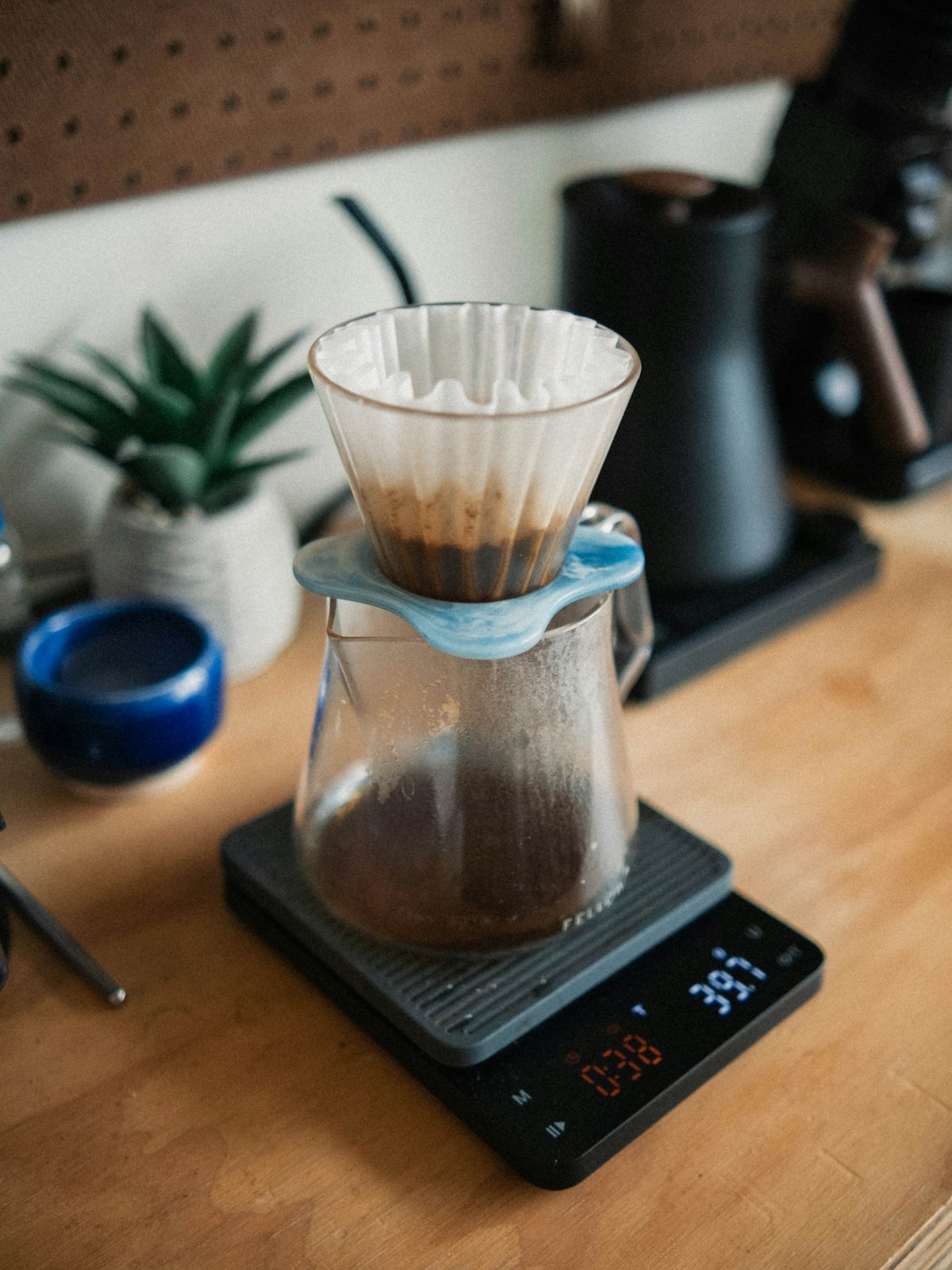
Put a paper filter in a dripper and rinse it over your mug, then discard the rinse water. Add coffee and level the bed. A kitchen scale makes the routine repeatable. Use drinking water you enjoy and a kettle you can handle comfortably; a special spout helps control but is not a membership requirement.
Give the coffee room to bloom
Try a 40 g first pour and wait about 30 seconds, then add water gently until the scale reads 180 g. Finish with another pour up to 320 g. These are our suggested starting quantities, rather than a tested optimum for every coffee. Think of the first wetting as checking that no dry pockets remain. Note how long the drawdown takes, but let flavour make the final decision.
Troubleshoot one change at a time
If a brew drains very slowly, try a coarser grind next time. If the cup is thin and sharply sour, try slightly finer grinding while keeping the dose and water fixed. A timer is a useful notebook companion, not a judge handing out medals. Different beans deserve a little adjustment.
Change one thing, taste, and keep a short note. A recipe becomes useful when you can repeat the cup you enjoy.
Try it for yourself
Sources & further reading
Source links support the factual context. Our home recipes and tasting suggestions are identified as starting points.